Nov 7, 2025
Act Like a CEO: Making the Warfighting Acquisition System Operating Model Real

by Meagan Metzger, CEO
The Warfighting Acquisition System (WAS) is here. But if it’s going to work, portfolio leaders have to act like CEOs, not compliance officers. That’s because the Secretary of War’s redesign of the WAS is not just another passing reform, but a fundamental challenge to how the Department buys, builds, and fields capability.
If implemented well, WAS could close the long-standing gap between innovation and operational advantage. But without a new operating model that empowers portfolio leaders to act with the strategic lens and breadth of a CEO, this too will fade into the stack of reform PowerPoints that promised speed but delivered slides. At Dcode, we’ve helped federal and defense leaders operationalize exactly this kind of acquisition reform for years, especially when it comes to integrating commercial technology. Here’s how this policy becomes reality.
1. PAE = CEO of a Capability Portfolio
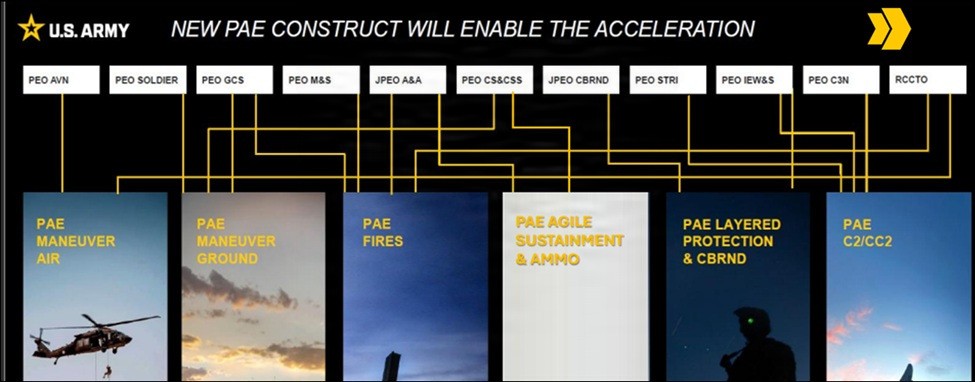
Portfolio Acquisition Executives (PAEs) aren’t just Program Executive Officers (PEOs) with a bigger program basket. They’ll now need to make trade-offs, allocate capital, and build teams the way a CEO manages a multi-product business portfolio. That means treating portfolios as dynamic investments, not static programs, and orienting them to measurable, portfolio-wide results. Leaders need to transform their operating model and how they approach their role.
Start now:
Think about balancing risk-return across the whole portfolio. Treat emerging tech like commercial companies run R&D bets, and legacy systems like core operations that need to be optimized, not defended.
Build cross-functional teams – acquisition, engineering, contracting, and budgeting – with a greater focus on working together, rather than in program siloes.
Define and own your metrics: time-to-field, mission effect, and learning velocity, not just cost and compliance.
“Being a PAE isn’t about managing programs, it’s about running an enterprise. You’re accountable for capability outcomes, not checklists.”
2. Architect the Operating Model for Agility and Speed With a RAIC™
The memo’s most ambitious promise – integrating commercial capability at speed – will rise or fall on execution. Continuing the CEO analogy, PAEs are running tech businesses, not utilities. They need a model that adapts to unpredictable change and rapid innovation on the part of our adversaries – in real time.
To deliver it, the Department needs a new mechanism embedded within every PAE: the Dcode Rapid Acquisition Integration Cell (RAIC™).
A RAIC™ is an embedded team that connects commercial innovators with acquisition authorities and operators inside the government apparatus – constantly sourcing, evaluating, and scaling solutions that work, while eliminating the traditional “valley of death.”
CEOs often stand up rapid action cells in dynamic, growth-oriented areas of their business, both to deliver in specific segments and to seed the growth paradigm into the larger enterprise. Built on a playbook and as a packaged install, RAIC™ does the same thing in portfolios.
Start now:
Identify where a RAIC™ is needed within your portfolio. Where is the technology frontier most affecting tactical operations? Where are the R&D bets being placed? Where has it been hardest to attract commercial vendors?
“The fight demands more than just cutting-edge technology, it needs a model that empowers a tech-savvy and agile workforce to actually move new capability the last mile. An embedded, expert team is the best way to jumpstart that model.”
3. Invest in the Workforce That Can Run The New Model
No system, however visionary, survives without the people who can execute it. The WAS won’t succeed without a commercially fluent, outcome-driven acquisition workforce. The new Warfighting Acquisition University (WAU) is a good start, but leaders can’t wait for it to stand up.
Start now:
Start developing your own operators who understand both the mission and the market. Identify and empower your most adaptable acquisition professionals. Pair them with commercial leaders – product line executives, venture investors, and startup founders. Tie incentives to mission capability delivered, not documents produced.
Partner with organizations already training acquisition teams to operate at commercial speed. At Dcode, we’ve trained more than 2,000 federal and DoW professionals on how to engage with nontraditional technology companies and use modern acquisition authorities effectively. Our programs go beyond classroom theory and help acquisition teams build the muscle memory to operate at commercial speed.
“Commercial tech integration isn’t a policy, it’s a practiced skill set. And it’s one every acquisition team can master. We know, because we’ve done it.”
The Moment to Execute
The WAS could be the most significant shift in defense buying in decades – if it’s treated as an operating model, not another compliance framework. For PAEs, the job ahead isn’t to make a checklist from the Secretary’s memo, it’s to act like a CEO: set the vision, align the resources, take calculated risks, and measure success by capability in the field. The Department has issued the intent. Now it needs the operators – and the RAICs – to make it real.